Stem Cell Donors Australia was formerly known as Strength to Give and ABMDR. Learn more.
Ben first learned about Stem Cell Donors Australia while donating plasma through Lifeblood.
He noticed information explaining that men aged 18 to 35 are more likely to be selected as stem cell donors. The sign explained that joining the registry was as simple as ordering a free cheek swab kit and returning a sample.
The idea stayed with him.
Having seen family members affected by serious health conditions, including cancer, Ben understood how important hope can be during difficult times.
“If I can give someone some hope and a second chance, it’s very much worth it,” he says.
After joining the registry, life continued as normal.
Like many registered donors, Ben understood that while young men like himself are more likely to be selected as stem cell donors, it’s still rare to be matched with someone.
That’s why the call eventually came as such a surprise.
“When I first was contacted, I was surprised,” Ben recalls.
While younger male donors are more likely to be selected, finding a suitable donor remains uncommon. Learning he could help someone in need quickly became an emotional moment.
“Knowing I might be able to really help someone who has been going through a really difficult time is very special.”
Once he agreed to proceed, Ben completed the medical assessments that help ensure donation is safe for both donor and recipient.
The experience left him feeling reassured.
“The staff were excellent,” he says. “The doctor sat down and explained what was involved, any possible risks and answered any questions I had.”
More than anything, Ben was struck by the emphasis placed on donor wellbeing throughout the process.
“You could tell donor safety was a massive priority for them and I felt very at ease.”
Like many donors preparing for a peripheral blood stem cell donation, one of Ben’s biggest questions was how he would manage the injections required in the days leading up to collection.
At first, the idea of giving the injections himself felt intimidating.
“Initially I was a bit apprehensive when it was first suggested I could give myself injections,” he says.
That feeling didn’t last long.
After watching an instructional video and learning what was involved, the process became much less daunting than he had imagined.
“It only took about a minute each time,” he says. “Even the first one was quite quick.”
In fact, Ben found that administering the injections himself gave him a greater sense of control.
The side effects were also milder than expected.
Although he experienced some fatigue and mild bone pain throughout the week, he was still able to keep up many of his usual activities, including regular exercise.
“I thought I was going to be really knocked around,” he says. “But I still managed to keep on top of training as well even if I had to reduce the weights on some days.”
By the final evening before donation, the side effects were more noticeable. Even so, Ben found it helpful to keep the experience in perspective.
“Yes, I might have felt a bit uncomfortable but compared to what the recipient must be going through, it was very minor.”
When donation day arrived, Ben says he felt supported from the moment he arrived.
“The nurses and doctor made sure that I was comfortable and were great with explaining what was happening throughout the process.”
The donation itself was much like the plasma donations he had done before.
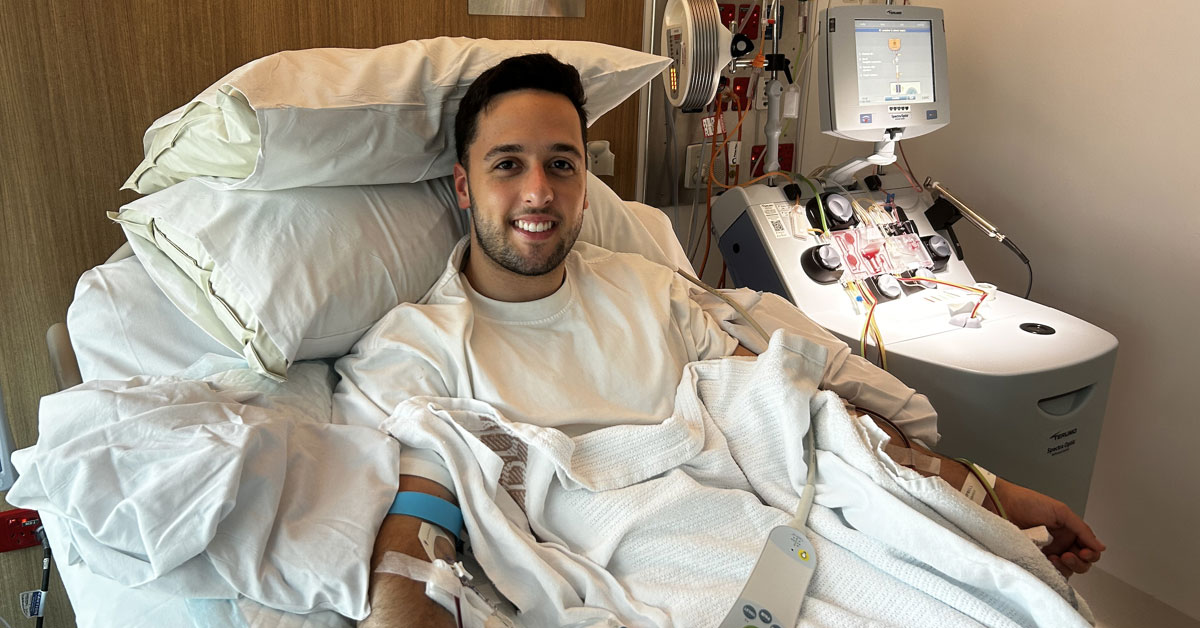
For several hours, blood was collected through one arm, passed through a machine that separated the stem cells, and returned through the other arm.
Then it was done.
After heading home, Ben spent the remainder of the day resting.
By the following morning, he had recovered well enough to return to work.
A few days later, he was back in the gym and feeling like himself again.
Looking back, Ben is quick to encourage others to join the registry.
“Do it – 100%; every new person on the registry gives someone else a possible chance – it’s an easy way to pay it forward and its very rewarding and you will be very supported along the way.”
He’s equally grateful for the support he received from the people around him.
His family, friends and workplace all backed his decision to donate, making it easier to fit appointments and preparation around everyday life.
For anyone who may one day receive the call that he did, Ben has a simple message.
“It’s an opportunity to give hope to another person at one of the most difficult moments of their life.”
And, he says, you’ll be supported every step of the way.