Stem Cell Donors Australia was formerly known as Strength to Give and ABMDR. Learn more.
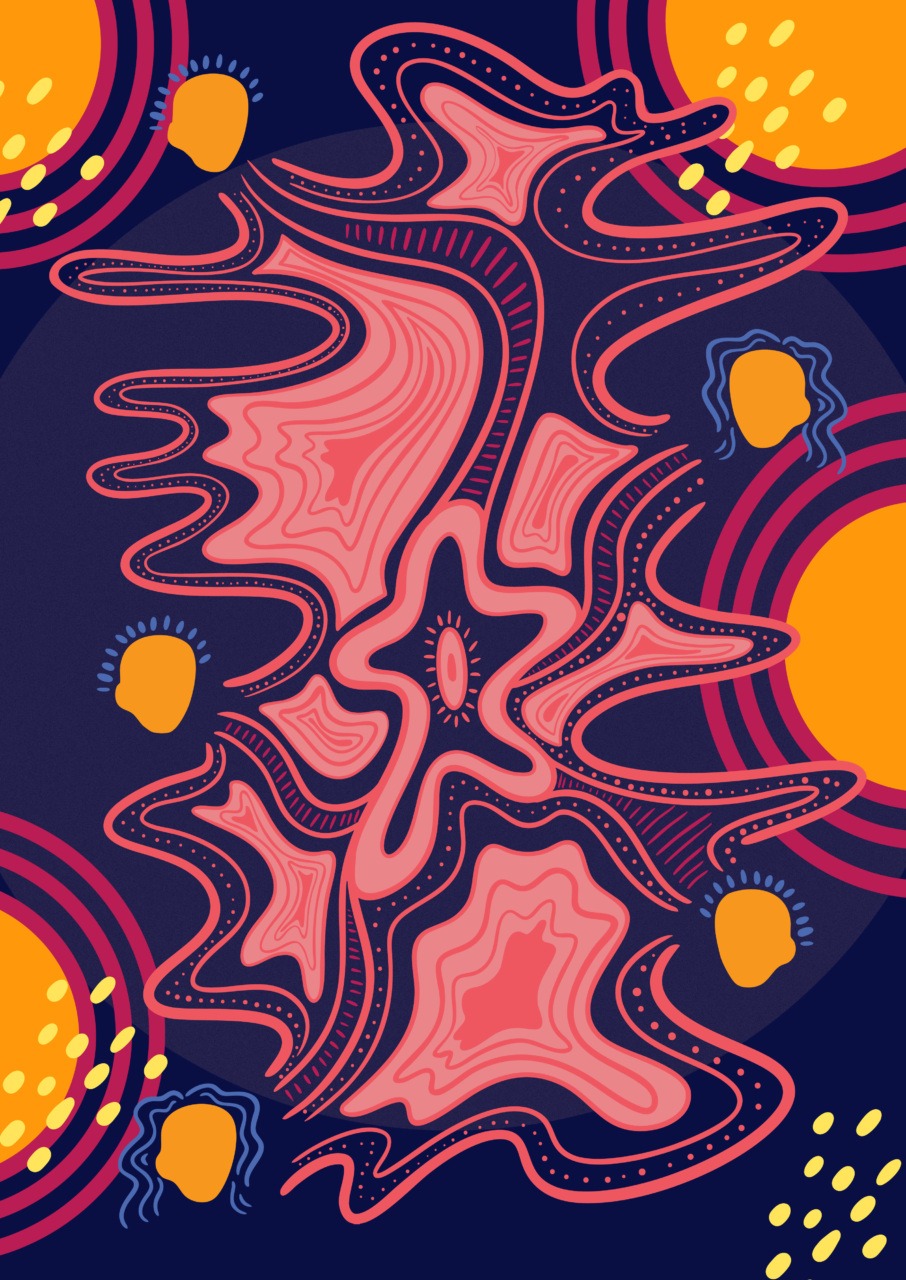
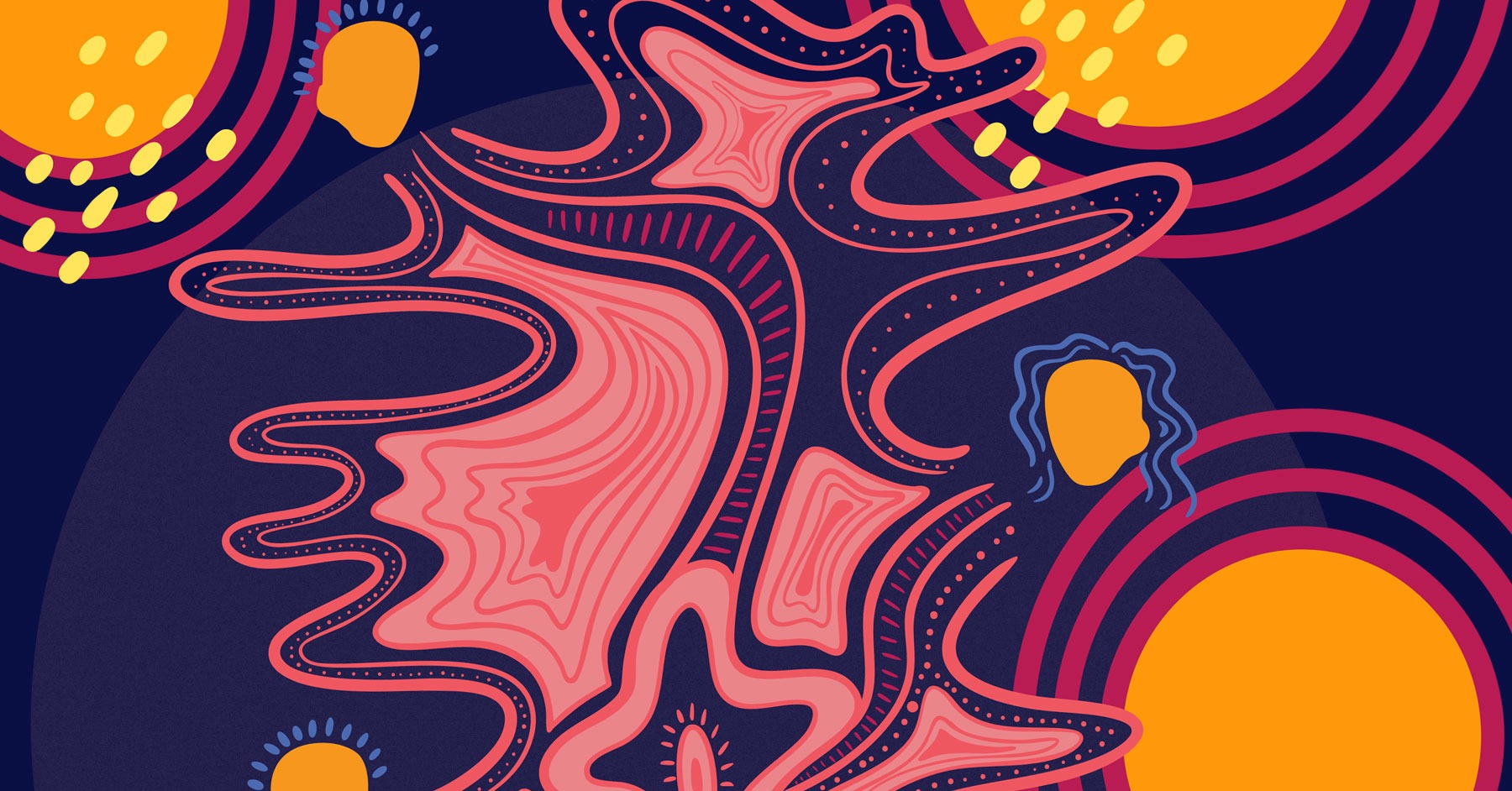
Molly’s artwork brings to life the invisible bonds between a stem cell donor and the person whose life they may one day help carry forward. In her words, the illustration is “an abstract portrayal of the invisible ties that bind us – the movement of bloodlines, lifelines, and flowlines between donor and recipient.”
Molly describes the work as a meditation on generosity and shared responsibility, a reminder that no one exists in isolation, and that the act of becoming a donor extends far beyond the moment itself.
“The shapes and lines move like currents, weaving and merging, a reminder that no one exists in isolation. We are all part of a shared rhythm, a larger story. Through this piece I wanted to honour the quiet, powerful act of giving, and the way it echoes beyond the individual — becoming part of something collective, something eternal.”
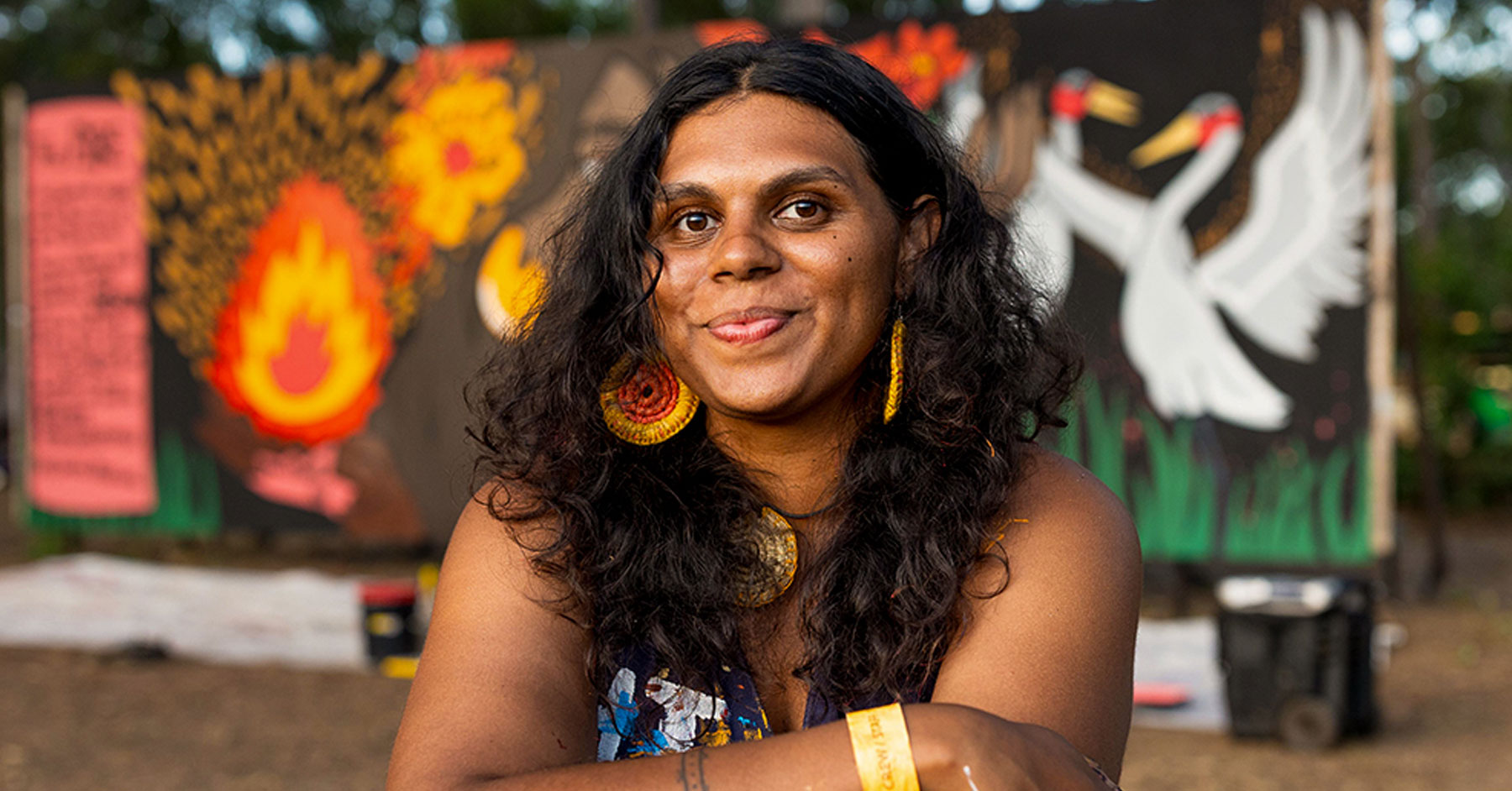
Molly is a Kimberley-born multidisciplinary artist who works between animation, illustration and design. She creates immersive stories that explore connection, memory, and the invisible threads that bind people, communities, and Country. Her practice is both grounded in place and expansive in imagination, weaving the mystical and the everyday into bold, resonant visuals.
This artwork is no exception. It reflects the central idea that stem cell donation, the act of offering part of yourself so someone else may recover, is deeply tied to values of care, kinship and continuity.
During our consultation process, First Nations donors and a transplant recipient shared powerful reflections about how the artwork spoke to their lived experience.
One transplant recipient said:
“It shows the bloodline and flowline between donor and recipient – a reminder that everyone is connected. I lost a lot of connection with people at times during my treatment, so this artwork feels grounding. It tells more of the story and the importance of mob and having people around.”
Donors echoed this sense of resonance and belonging:
“This work, while modernised, still speaks to our historical ties and ancestors, it speaks to our connections, our culture and most importantly family. It looks at journey and has no sharp borders. This is mob. This is us.”
“I like how it combines traditional elements with Molly’s modern style, a reminder of an Acknowledgement of Country: respect for the country that was and always is Aboriginal land, alongside the Elders past and present. This piece reflects stem cell donation by showing a central life force, flowing through various people and communities.”
Others reflected on identity and shared humanity:
“Because on the inside we are all the same, it works for everybody. The human body is made up of all the same components and it shows the true deeper meaning to stem cell donation, which is a deeper connection those people will always share”
Over and over, people described the piece as connecting, grounding, spiritual and reflective of the ongoing links between past, present and future.
Stem Cell Donors Australia maintains the national registry of volunteer donors who may one day be called to donate blood stem cells to someone with blood cancer or a serious blood disorder. A transplant can be a life-saving procedure, but only if the patient can find a close genetic match.
For First Nations patients, this match is much harder to find. Not as many First Nations donors are currently registered, and overseas registries cannot fill the gap. That means the best chance for a First Nations patient to find a donor is here, within communities.
Our goal is simple but urgent: to grow the number of young First Nations adults aged 18–35 who join the donor registry.
We know this can only happen through relationships built on trust, understanding and cultural safety. Recent research we commissioned highlighted several key insights:
This commissioned artwork is one part of that work, a culturally grounded way to open conversations, share information and build understanding in ways that feel respectful and relatable.
Improving outcomes for First Nations patients can only happen if the work is community-led. We are looking to establish partnerships with organisations and individuals that have strong local connections, trusted relationships, and a commitment to supporting young people and families.
Partners can help:
In turn, we can offer training, resources, campaign materials and ongoing support, ensuring the work is purposeful, culturally safe and responsive to the needs of communities.
If your organisation, community group or program is interested in working with us, we’d love to hear from you.
Learn more about partnerships with us here.