Episode 4: What stem cell donation day is really like
In this episode, we hear from Yoni, who signed up to become a stem cell donor at just 18 and then didn’t think much about it for years. Nearly a decade later, he received a call that would change everything: he was a match for someone in need.
Yoni shares what that moment felt like, the journey from first contact through to donation, and how surprisingly simple the process really was. He reflects on the support he received along the way, the reality of donating to a complete stranger, and the powerful sense of purpose that comes with knowing you may have saved a life.
This is a story about the impact of one small decision and how something you do today could change someone’s future years down the track.
Listen now to hear how an ordinary choice became an extraordinary act.
Listen now:
 Listen on Spotify
 Listen on Apple Podcasts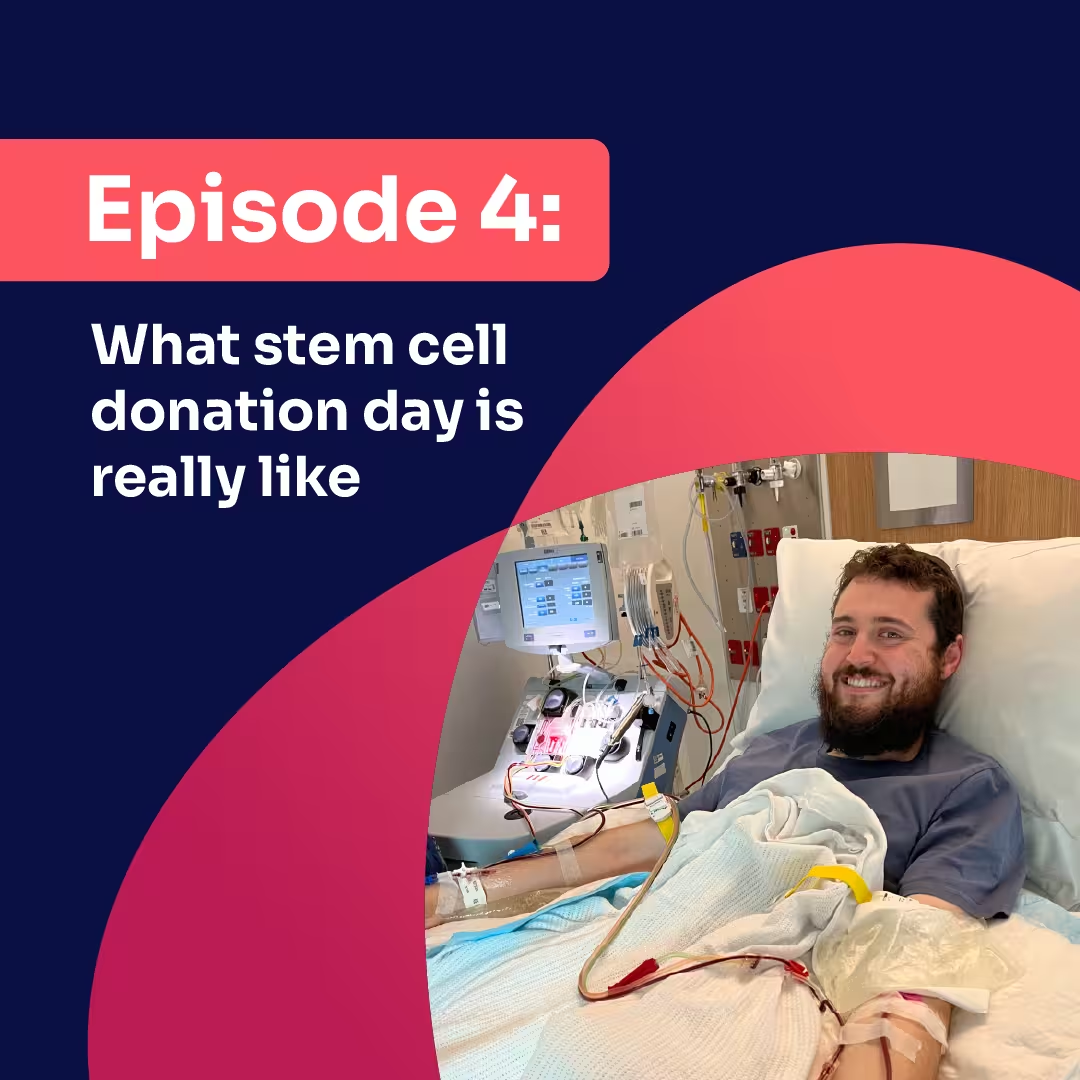
[00:00:02] Yoni: Welcome to the Stem Cell Donors Australia podcast.
[00:00:12] Daniel: This month, we chat with Yoni, who joined the registry at 18 and didn’t think much about it for years. He shares what it was like when he finally got that life-changing call, the donation process itself, and how it felt knowing he could help someone he’d never met.
[00:00:28] Kelly: Yoni, thank you for joining the Stem Cell Donors Australia podcast. Yoni, you donated your stem cells to a complete stranger in need in 2022 and you’re here to share your story with us. So thank you for joining.
[00:00:41] Yoni: Oh yeah, no problem at all. It’s really nice to be here.
[00:00:43] Kelly: Yoni, tell me how you signed up to be a stem cell donor.
[00:00:47] Yoni: For me, the actual signing up to be a stem cell donor preceded the donation by, I think like 8 years or something like that. So there was quite a gap in between. I was 18 years old. I think I had just turned 18. And I was in a religious school at the time here in Melbourne. And one of the faculty members at the school kind of made an announcement one day and said, look, for everyone who’s 18, there’s someone in the community who is in really desperate need of a stem cell donation. And we’re looking for people to sign up to the registry. So to see if we can find a match. Something I found out throughout the process is that you’re a lot more likely to match with someone who shares a similar ethnicity to you. So in that case, for me, it was the Jewish community. And so there was someone in the Jewish community that was pretty unwell. So I kind of went with a bunch of friends and we thought, you know what, why not? Let’s do it. It’ll be a nice thing to do. Maybe we could actually help someone. And also we were able to like take a few hours off It’s like, yeah, let’s go for it. It sounds great. So we went with this faculty member. We all signed up together. We had a bit of a laugh, good times. You know, they took our blood. It was a really simple, easy process. And I remember about the time this faculty member, you know, he took photos of all of us going, you know, to put it in the school newsletter or something like that. And, you know, eight years later, after I had finished the donation, he actually messaged me the night after I had donated and sent me this photo of myself from 8 years earlier. And I was like, this was the moment you signed up. Like, I don’t know if you even remember this. And so it was a really nice throwback for me to kind of look back and be like, wow, that one random action I took, you know, years earlier had actually resulted in this donation.
[00:02:28] Kelly: Yeah. So he obviously knew you were donating, though. That wasn’t just a coincidence he sent that photo.
[00:02:34] Yoni: So I don’t know. It could be that my mother had spoken to him mentioned that I was donating or something like that, or he had heard word that I was doing this donation. But he sent me the photo that night and it was just a really nice moment. Yeah, I don’t know exactly how we found out.
[00:02:49] Kelly: Yeah, that’s funny. So you signed up via Lifeblood, I would imagine then.
[00:02:55] Yoni: So I kind of remember what year it would have been. 2013, I think. Yeah, I think in those days it would have been Lifeblood. We went to basically a blood donation center just around the corner from us. And then I think, yeah, while you were there, we went specifically for the stem cells, but also I think a lot of us just went and actually donated like a liter of blood while we were there anyway.
[00:03:16] Kelly: Yeah, nice. Good on you guys. And so for those who are listening who might not know how to sign up, you can still sign up via Lifeblood when you go to donate blood or plasma. You can just ask them that you’d like to register as a stem cell donor and they’ll take an extra vial of blood and register you on the donor registry. Alternatively, you can now sign up via cheek swab, which I don’t think would have been around. 10 years ago. I think it’s only maybe 5 years old now. So yeah, you can register for 18 to 35 via our website for a free cheek swab kit that gets sent to your house.
[00:03:50] Yoni: Yeah, it’s good to know that these days you do have that option of the cheek swabs.
[00:03:55] Kelly: Yeah, absolutely. Because you can, I guess, reach so many more people. You don’t have to leave your house to sign up, except if you sign up via cheek swab, you have to send the cheek swab back. People often will sign up, they’ll get sent out a kit, they’ll do it, and then they won’t send it back. It’s kind of like returning something that you’ve bought that you don’t want anymore. Not in the sense that you don’t want it, but it’s like that extra annoying step going to the post office, going back to return something. Guys, you got to do it.
[00:04:23] Yoni: You got to send it back for that to work. You got to send it back.
[00:04:26] Kelly: It’s the main part. But we actually find like 50% of the swabs that we sent out don’t get sent back. So we kind of hound people a little bit. But anyway, when you first signed up when you were 18 and you heard that someone in the community was sick and needed a stem cell transplant, did they explain to you the, I guess, the seriousness of the illness at the time, did you guys understand how signing up would potentially save someone’s life?
[00:04:53] Yoni: So we certainly understood the seriousness of it at the time, because I think people in the school knew this person, and they probably knew how sick this person was. And yeah, that was kind of how it was pitched to us. It was kind of pitched as being like, sign up, you never know and you could genuinely save this person’s life or at least really improve the quality of their life. So I think that was definitely a pull for us. Like I joke about the fact that we got to take a couple hours off school, which was great. But it was a real motivation there that you could seriously help someone in need. And also, I think most people have been affected by having someone that they know that’s been really sick through cancer or something similar. And so I think the idea that you could sign up and really help someone that definitely wasn’t lost on anyone.
[00:05:41] Yoni: And it was certainly a consideration. So I remember at the time, yeah, that was definitely in the back of my mind. I was like, you know, this really could help. So yeah, like it’s good. My friends, they kind of make fun of me now. If ever they want to kind of like make fun of me, they’re like, oh, look at you, who’s the lifesaver?
[00:06:00] Kelly: That’s cool though. Like you’ve done basically, you’ve done this something that’s kind of a once in a lifetime opportunity. Like not many people get to do what you do. So for those who don’t know and who are listening, stem cell transplants save the lives of people living with blood cancers and blood disorders. And it does that because essentially you’re swapping out the healthy immune systems with the donor, like Yoni here, to a sick person’s immune system. So if someone has leukemia, for example, And their treatment is not working, nothing else is working. They need new blood stem cells. And so they get them from a healthy donor. So that’s essentially when we say it saves someone’s life, that’s essentially how it saves their life. It’s giving someone a new immune system, which is awesome. So you were how old when you signed up?
[00:06:44] Yoni: So I was 18 when I signed up.
[00:06:46] Kelly: And then how old were you when you got the call
[00:06:49] Yoni: Yeah, so I was around 26. I was right towards the end of my university degree at the time, because I was in America for a few years. Came back and only then started studying. Yes, I was around 26. It was a bit of a gap later, but I remember it as clear as day when I, can’t really say I got the phone call because I missed the phone call. So I was doing an exam, so my phone was, obviously it was off. Turned my phone back on, so I had a missed call from like a number that I didn’t recognize. But yeah, I’m not the type to ignore numbers that I don’t recognize. I always call them back.
[00:07:24] Kelly: Thank God.
[00:07:25] Yoni: Yeah. But actually I think they left me a message. So I listened to the message and it basically was just really direct to the point and was like, you signed up to this registry years ago. We found someone who we believe that you are a match for. Give us a call back if you want want to hear more information. And I remember as soon as I heard it, I was like, oh wow, like that’s fantastic. I was really happy about it. Immediately called them back. I believe it was Haley. I think she was the person that was organizing my whole donation. She’s fantastic, by the way. Shout out Haley. Yeah, shout out Haley. No, she was really fantastic throughout the whole thing. But yeah, I called her back and I remember she stayed with me on the phone for like a good while, really explained things from the beginning to the end. And I found it fascinating because she didn’t just explain what it would entail for me physically. She also went and explained the science behind it, which I really appreciated, kind of hearing about the periphery of the stem cells and the way it works in the system. And I was like, oh, yeah, that was interesting. So she explained the whole process to me. for a good while in a very non, like, it’s gonna sound weird, like a non-confrontational kind of way, very like. Kind of neutral. Very neutral. This is just something that you can do if you choose to do it. Which by the way, I don’t know if this is skipping ahead, but that was something I found all throughout the process. There was never any feeling of pressure. I remember even when I was speaking to the doctors, you know, right towards the end of the process, there was still really no pressure about it was just, this is an opportunity for something that you can do if you choose to do it. And, that was really the sentiment all the way through. So I had that right at the beginning. But right after I got that call, I straight away called my wife. I probably should have called her beforehand. I just wanted to see if she was okay with me doing it. I called my mother because I was just really excited about it. And yeah, and then I think from there we had set up a time to have a follow-up conversation about, you know, the practical next steps of the whole process.
[00:09:26] Kelly: Nice. And that’s, it’s a really good point, the non-pressure conversations all throughout, because, we don’t want donors thinking that they have to do this thing. It is very much an opportunity. But it’s cool that you were excited to do it, because that’s definitely the type of person we want on the registry.
[00:09:41] Yoni: I remember being surprised, because when I first heard about this donation, I think it was still called a bone marrow donation, which I had the understanding of that being a really invasive surgery where they have to like, dig into the bone and you get hospital for like a week or so. And that was what I had actually thought to myself I would be doing. And then during that first conversation, she was like, oh yeah, we don’t have to do that anymore. Like science has taken us to a place that we can actually, you know, do it really in a non-invasive way. And that was quite a relief.
[00:10:13] Kelly: A relief, I’m sure. Goodness. We have to speak to a couple of donors who say the same thing, when they used to think it was a needle in the hip and they were still going to go ahead with it and then they find out that it’s not. And I’m like, oh, you guys, impressive. You’re still going to do it anyway
[00:10:28] Yoni: No, well, meaning that’s why I think it’s like, it’s really like not a difficult process to go through.
[00:10:34] Kelly: Not at all. It’s really quite easy and enjoyable in some ways.
[00:10:37] Kelly: So tell me anything else about that first phone call you remember, kind of, I guess, letting other potential donors know what to expect on the first phone call.
[00:10:46] Yoni: In that first phone call, I think it was really just an explanation of what’s going to happen. So it was really just an explanation of, you know, this is what the timeline would look like, this is what it would entail, and this is what you could do for someone else. That was kind of my recollection of it. has been a few years now.
[00:11:05] Kelly: Yeah. That’s so fine. So what were the next step that you remember?
[00:11:08] Yoni: So the next steps following that, well, look, there was a little bit of paperwork that you got to just send through, which is very understandable. Following that, that we had a day in hospital, which was the workup day. I say a day in hospital. It was probably about 3 hours, maybe 4 hours. On that day, you meet with, well, I met with my coordinator. So I met with Haley and a couple of different people that kind of overlooked the whole process. We also met with several doctors who basically meet with you and they explain the process and explain every part of it. Nurses who are going to be there on the day and things like that. And then they do basically a physical. So take your blood, x-ray, echocardiogram, just really basic tests to make sure that you’re completely healthy and you’re fine and you’re good to go. One thing that really stuck out with me for that day was that I remember after the end of all these tests and everything like that, one of the doctors actually sat down with me and he wanted just to see how I was doing mentally. to make sure that you were in a good state to do a donation process. And I remember he was really kind. He was really empathetic, understanding. And he really earnestly looked at me and said, you know, you don’t have to do this. is something that you can do if you want to do it. And there’s not going to be any pressure anyway. and continued in that kind of vein. And I remember thinking to myself, like, that was a really nice thing to hear. There was really no pressure here. There was really nothing scary about it. You know, there was a doctor kind of, you know, metaphorically holding my hand throughout it. Nice. And I really were really appreciating that conversation.
[00:12:48] Kelly: Yeah, nice. Would you have felt without those types of conversations that you might have felt pressure, not by someone, but just like the innate thing that you’re being asked to do? Like, would you almost feel like without those conversations, you might have felt you wouldn’t be able to back out even if you wanted to?
[00:13:06] Yoni: Well, that’s a good question. Look, there was no one, I didn’t find that there was anyone along the way whatsoever that was putting any pressure on it. I think by nature, Because I knew what I was getting myself into, because I knew what I would be doing for someone else, I think internally I probably felt a little bit of pressure of being like, you got to do this. But I definitely didn’t feel it from anyone else. I’ve had a lot of hypothetical questions or conversations with my wife where we’ve discussed, what if you needed to donate a kidney to someone or you needed to donate an organ and who would you do it for? like these conversations that we always tend to have just as I’m falling to sleep. Oh, that’s funny. But, you know, in this situation, it really, it didn’t feel as scary because I knew I’m not donating an organ. I’m not needing to be put under a general anaesthetic. There was really, which I guess in a way increased the pressure because it’s like, all right, you’ve really got to do it.
[00:14:08] Kelly: There’s no reason not to, hey. There’s no needle in the hip. And I think there’s a bit of uncomfortability if you’re sitting in a chair for four hours as you would at work. But again, when you consider what you’re giving to someone else who’s kind of lost all chance, if you’re searching for a stem cell donor on the registry, then your other treatment measures have likely failed, which I don’t think people realise. It’s often a last resort if they’re searching for a stranger on the donor registry to help them. If they could do another way, they would, because finding a donor is actually really hard.
[00:14:43] Yoni: Yeah. that actually, that kind of ties into something that I’d been thinking about the other week, which was, so like I said, you often find donors, apparently, I’m not a doctor, but apparently you often find matches within your similar ethnicity and often within families, you can find someone also that’s a match with someone similar. And when I was donating, something that we just found really interesting my wife had a family member who a number of years ago had cancer and was in need of a stem cell donation. And she did find someone. And it was quite a significant event in my wife’s family’s history. But what was interesting was that as I was going through my donation process, we realized that one of the nurses and one of the doctors who was kind of generally in charge of overseeing my donation was also involved in my wife’s family member’s donation. Wow. Yeah. So that was kind of like a nice tie together.
[00:15:46] Kelly: How did you figure that out? Were you kind of just talking about that story and people remembered the name or?
[00:15:51] Yoni: So I think a week or so before the donation, I mentioned it to my wife’s family that, you know, I’m going to be going in for a small procedure in like a week. And then they said, oh, well, while you’re there, why don’t you ask about a certain doctor? So we went to one of the nurses who were on hand on the day. So we mentioned this doctor’s name and the nurse said, I’ll ask him, I’ll see if he remembers. And so this nurse went out, spoke to the doctor, and he said that, of course, he remembered. Then the nurse said that she herself remembers that she was actually involved in that process.
[00:16:23] Kelly: Wow.
[00:16:23] Yoni: I just got chills.
[00:16:24] Kelly: That’s cool.
[00:16:25] Yoni: It was like a really… I guess like wholesome kind of for us.
[00:16:31] Kelly: Nice. And how did that, your wife’s family member’s transplant take? Is that person doing well now?
[00:16:37] Yoni: Yeah, completely better. I was just speaking to this person a few days ago. Yeah, no, this person had a pretty serious cancer and he’s, yeah, doing completely fine today.
[00:16:47] Kelly: Stem cell donors saving lives.
[00:16:50] Yoni: Yeah, no, thank God. Well, it wasn’t me that time.
[00:16:54] Kelly: Well, getting back to your story. So you’ve mentioned Hayley a couple of times. Hayley would have been your coordinator. And so she would have been with you through the whole procedure from start to finish, not necessarily on the day, but walking you through as a kind of contact, a contact support person.
[00:17:12] Yoni: Yes. So I was very thankful towards her. She was really fantastic throughout the entire entire process. Yes, you are assigned a support coordinator throughout the whole process. And I don’t know if people realise this. So from the very first phone call, you have someone supporting you. But then actually up until I think a year after your donation, you also have the same person checking in on you, making sure you’re okay. So this is, you know, a week after your donation, you have a check-in and a month after and six months and a year. and you really are supported. And any questions that you would have throughout the whole process, you can just shoot them an email, a text, a call. They get back to you really quickly. So really throughout the whole process, you know, Hayley was there and there were other people who were also really supportive. So yeah, it’s just a really big help. Yeah. It makes people very comfortable in it.
[00:18:07] Kelly: Yeah, absolutely. Having someone there to answer all your questions would be amazing.
[00:18:11] Yoni: Yeah.
[00:18:13] Kelly: So you’ve done your workout, which is a half day health check, just making sure you’re fit and healthy and willing. And then what happens?
[00:18:21] Yoni: So as part of the health check, again, they take your blood, blood pressure, everything like that. Just by the way, on the day itself, I was really happy to have a whole workout because I don’t think I’d had just a regular checkup at a doctor in like a couple of years at that point. It was just really helpful to have that done. Following your whole workup, about maybe a week later, you are expecting a call from them just to make sure that all the samples that they took from you have come back clear and healthy, and that you are in fact a proper match for the person that you’ll be donating to. So I remember for me, I was actually a little bit nervous in those days in between, because at this point I’d been through this whole process. I was really amped up to just do the actual donation. So I was like, oh my God, I hope everything’s fine. I hope everything’s okay. And got the call a few days later. They said, yep, absolutely all clear. You’re good to go. Now we’re going to set the date for the actual donation. Now, I imagine that there’s probably a bit of a balance between making sure everything is set up in time, but also getting the stem cells to the recipients in time. They’re obviously pretty unwell. So I think there was about a six week gap between the work up and the actual donation. So a day was set. They just double checked with me that day would be fine, which of course it was. And then I had basically six weeks to just kind of relax and don’t do anything too stupid and get myself injured or anything like that. And then, came the day of the donation itself. So part of the process preceding the actual donation is that you need to get a couple of injections a day for about four days, which is not scary. You just, they, on your workup day, they give you the injections to take home with you. And they’re not the type that needs to be administered by a doctor. You can do it yourself. You just do it into your stomach and it’s kind of just like a push pin, very simple to do. So I am a little bit queasy. So I got a family member who was a doctor. I went to him every night and said, can you just do this for me? And I’ll just close my eyes. And so he said, sure. So you do that for the days leading up to the donation. Really simple, really easy. I do know a lot of other donors have some pain on the 3rd and 4th day of those injections. And I had that as well. I remember I did have some lower back pain because I think the stem cells are busy coming out of the bone marrow, but a bit of Panadol took care of that and I was totally fine. So that’s just one of the things you’ve got to do in the lead up to the day.
[00:20:45] Kelly: Yeah, that’s a good point to highlight as well, because some people do get a little bit of pain and some people don’t. But what the pain is, as you mentioned, the stem cells coming out of the bone marrow. And it’s a similar pain as you’d get to when your body’s fighting a sickness, because that’s what stem cells are when we spoke about what the immune system does there. And so when the stem cells are coming out of the, out into your bloodstream, it’s almost like it’s your immune system in overdrive. So you’re producing more stem cells than what you usually need. And that’s what would happen sometimes when you have the flu. And then that achy joint pain is actually your body fighting what would usually be a flu, but in this case, it’s preparing to give those stem cells away to help someone else fight their sickness.
[00:21:26] Yoni: That’s really interesting. I didn’t even know that.
[00:21:29] Kelly: Yeah, it’s interesting. Hey, so now next time I have the flu or something and I have that joint pain, I’m like, oh, this is what’s going on in there. I heard the GCSF injections are quite similar, I guess, to an insulin injection in the way that it’s very self-administered. So I guess it’s cool that you were able to even people who are queasy around needles and they find this part of the process a bit of a turn off in joining, your story is actually really great for them to hear because you can just get someone else to do it for you.
[00:21:57] Yoni: Yeah, my wife kept saying to me, she was like, can I do one?
[00:22:01] Kelly: You wouldn’t let her.
[00:22:02] Yoni: I was like, just let the doctor do it. Let me just get this over with.
[00:22:07] Kelly: That’s funny.
[00:22:08] Yoni: She might have done one. I think she might have actually.
[00:22:10] Kelly: Yeah.
[00:22:11] Yoni: But yeah, I do know most other donors just do it themselves.
[00:22:14] Kelly: Yeah. The first one’s the hardest. Yeah. And then I think it’s like day four, you’re like, eh.
[00:22:18] Yoni: Yeah, exactly. Just get it over with.
[00:22:19] Kelly: So tell me about your donation day. So did you just take a sick day or an annual leave day? How did your work respond, I guess, to this?
[00:22:27] Yoni: So my work at the time, They were really supportive about it. Nice. They said, I explained to them what was happening. I believe the doctors that are part of the organization, they also give you a letter kind of explaining what you’re doing and saying, this is legit. This is legit. We’re not harvesting their organs. So I guess, I don’t think I even needed to show that to work. I just explained to them what was going on and they were really supportive of it. They said, absolutely, just go for it. take a sick day and that was kind of it. And then the day after, it’s recommended that you kind of take a rest day or, you take it easy for a day or two after the process. I remember that, honestly, the next morning after the donation, I woke up feeling completely fine. And so I didn’t even take a sick day for that. I said, like, I’m fine. But I know that there are some donors that don’t feel that. They do feel a bit weak the next day, but that wasn’t my experience at all.
[00:23:24] Kelly: Yeah, we do get a bit of a varied response. I think some people are either tired, maybe a little bit drained. They might need like a rest day, but you’re either… That’s like the extent of it.
[00:23:37] Yoni: I can’t say I felt any side effects or anything.
[00:23:41] Kelly: Amazing.
[00:23:41] Yoni: The next.
[00:23:41] Kelly: It’s crazy, hey, how like you can do such a significant thing and your body’s just like, yeah, well, back to it.
[00:23:46] Yoni: Yeah, literally. I think to be honest, even the night after the day, like the night of the donation, I don’t think I was really feeling any, you know, if anything, I was just feeling maybe, you know that feeling when you go when you’ve been sitting for a long time without getting up.
[00:24:01] Kelly: Yeah.
[00:24:01] Yoni: Maybe that was the extent of it.
[00:24:03] Kelly: And you would have been feeling really good about yourself too.
[00:24:06] Yoni: Yeah, it was pretty good. I still have the photos of myself with the bandages around my arms. Now I’ll just, yeah, think like, oh, look what I just did.
[00:24:15] Kelly: It’s a pretty cool thing to do. So you’re in Melbourne, so you could have just… I assume traveled into the hospital and then back home, you didn’t need accommodation or anything.
[00:24:26] Yoni: Yeah, so just for the people who might be listening, the registry does make sure to cover all your fees that you would need when it comes to where you’re staying on the day, your transport, everything like that would be completely covered. Nothing would be out of pocket. So The morning of, so obviously I’m in Melbourne, the hospital was maybe a 20 minute drive away. My mother actually picked up myself and my wife, who also took a day off work just to be there with me while I was donating. And she just dropped us off at the hospital and then picked us up again when we were done.
[00:24:57] Kelly: Nice.
[00:24:57] Yoni: So for me, it was a pretty seamless process. I was told before her donation, I was told it’s good to make sure that you have a big breakfast that day. And so that’s what we did. We went to a cafe in the morning, got ourselves nice good, healthy, and wholesome breakfast. Showed up to the hospital. And I think, if I remember correctly, there was someone there even to greet us and take us to the right floor. Went to the floor, just had to wait a little bit. And then a nurse escorted us into the hospital room. And that was kind of where we were located then for the rest of the day. So before we began, we had an assigned nurse who had already known me, who I had already met on the workup day. And she Just again, explain the process, which is like, look, you’re going to have a needle in this arm and you’re going to have a needle in that arm. And then the only thing we’re going to ask you to do is just literally relax, sit, do whatever you like. And for like the few years prior to the donation, I’d been working almost full-time and studying full-time. So I didn’t really have many days where I was just kind of doing nothing. It’s a holiday. it was kind of a change of pace for me at the time. So I remember I was just sitting there in the hospital. My wife was sitting next to me. We started watching some movies and TV. I think we listened to some music, just kind of hung out. And then every hour or so, someone would have come in to check it, check up on me to see how I was doing, to chat. So I have all these wonderful nurses and doctors coming in and just being really friendly, really nice, checking the progress of everything. My wife went and took some videos of the whole thing. just to remember it for later and everything like that. But really, there’s not like a huge amount to say about the donation itself, because it really was as simple as, the nurses just putting these needles in, hooking you up to this, pretty cool looking machine. And then just, there’s nothing else for you to do. You just relax.
[00:26:51] Kelly: You’re just kind of sitting in there. You’re sitting in a hospital bed and needling both arms, as you said, and the machine filters out the stem cells from the blood and gives it back to you in the other arm.
[00:27:02] Yoni: Yeah.
[00:27:02] Kelly: And how long were you sitting there for?
[00:27:04] Yoni: So, okay, so this was an interesting point. The person I was donating to was apparently larger than me. So they needed, you know, additional stem cells. So I did have to be there, I think a little longer than maybe the average person. I think I was there for about 5 to 6 hours. But I do know for a lot of people, it’s less than that. But it was about five to six hours. And I was just sitting in the chair. I don’t know, we watched a lot of Modern Family. And yeah, at different points, people came in to give us food and drinks and things like that. We had brought food with us as well, just in case. So yeah, it was really just a really nice, relaxing day. I was made really comfortable. I had nurses coming along, giving me blankets and heat packs. Because I guess for some people, you can sometimes feel a little bit of pain around where the needle goes in, but you can just put these heat packs on there and then it basically makes it just go away.
[00:27:58] Kelly: Nice. The only, I’d say, issue I ran into the day was that just one point I needed to use the bathroom.
[00:28:04] Yoni: I was going to ask.
[00:28:06] Kelly: And so that was just, it took a little bit of logistics to get that going.
[00:28:12] Kelly: Yeah, good. I mean, it’s good to know because donors might be, potential donors might be wondering, like, can I go to the bathroom during this process? Well, yeah. Yes, you can. confirm.
[00:28:20] Yoni: Yes, you can practically do everything. Just be yourself.
[00:28:24] Kelly: Nice. So you’re there for six hours, which is a little bit longer than usual. I think we usually say three to four, but that’s fine. Sounds like you’re pretty comfortable. And then they come in at the end, they tell you, I guess they’ve got enough of what they need and that’s it done. What do you do after that?
[00:28:41] Yoni: So just on that point, they did need to call me later in the night just to confirm that they did in fact have all the stem cells that they needed. And they called back and said that. Yeah, we got it. The option, the other option would have been to have come back the next day, just for like an extra hour or something like that. But they had said that they had enough. Once the donation process was over, the nurses came, they took the needles out of my arm. They let me pose with a photo of the different bags of things that they had taken out to be donated, which was a bit of fun, not for those who are queasy. And then, yeah, they bandaged my arms and, you know, you rest for a little bit before you get up. And then just like that, we were being picked up. So it was really, it was pretty sad. I think you are advised not to drive yourself after the donation, but yes, that’s why again, my mother came and picked my wife and I up and that was it. I went home and had a nice dinner prepared and that was really it. was almost anticlimactic. Yeah. It’s like, you know, after this whole process and then that’s it. Yeah. But again, I did have, you know, a doctor or a nurse come in at the end and kind of like say thank you and speak to me about it. So it was just like a really easy ending to what was actually a pretty pleasant process.
[00:29:57] Kelly: Yeah, nice. And how did it make you feel?
[00:29:58] Yoni: Yeah, so I felt really good afterwards. Of course, as you know, you can imagine. Yeah, it was something I said to my wife, which was, I guess you don’t get so many opportunities always to know that you’ve really helped someone else. But for me, I felt, you know, this was one time in my life where I’ve really helped someone else.
[00:30:18] Kelly: Absolutely.
[00:30:18] Yoni: Yeah. So it was a special moment for me, highly encouraged it to other people. But yeah, there was really no other feeling like it.
[00:30:25] Kelly: So what would you say to someone who’s potentially thinking about joining the registry but not sure?
[00:30:31] Yoni: I think joining the registry, there’s only upsides to it because, you know, helping someone else in need, there’s really no other feeling like that to know that, you know, you’ve really directly helped someone else. I know a lot of people, we’re all affected by cancer and we all know someone who it’s affected. So to know that you could really help someone else is, it’s a genuinely good feeling. But also it’s such a like easy process. They take such good care of you. It’s so non-invasive. You’re just sitting there for a few hours. You know, there’s really nothing to lose by joining the registry. You know, at most you’re going to really, really help someone else. And at worst you’ve joined the registry and nothing happens. But at least you can know that you’ve tried. So Really, I would say go for it. And also, if you are already in the journey or you’re potentially thinking about it, just a little piece of advice I would say is just try to enjoy it. Relax, have fun. They take good care of you. And yeah, it’s just like it’s a good thing that you’re doing. So enjoy the journey.
[00:31:33] Kelly: Yeah, that’s great advice. Enjoy the journey because it sounds like you definitely did.
[00:31:37] Yoni: Yeah, well, I also, I don’t know, my wife and I, we like the kind of like the sciency stuff behind it. So we were having a lot of fun learning about it. And then also looking at like, all of the equipment.
[00:31:51] Kelly: It’s pretty crazy, hey? The apheresis machine is what it’s called, where the blood goes in, takes the stem cells out, and then the blood goes back out again. And you’re looking at it, it’s kind of like this machine that’s spinning around the blood. It’s like, how is it doing that?
[00:32:02] Yoni: Yeah, We took videos of it and we were just like trying to figure out afterwards, how does this even, who figured this out?
[00:32:09] Kelly: And I guess the other thing, the last thing is to make a note that when you join the registry, some people might think that you donate straight away. It’s similar to a blood donation in some way where you have an action straight away. But in your case as well is a good example of you could be waiting on the donor registry for years, waiting for a match. So if you’re thinking about joining, be prepared. You might never get called. It’s kind of like a lottery. If you do get called, that’s awesome.
[00:32:35] Yoni: Yeah, no, that’s right. Exactly the way I would think about it. I maybe went with six other boys when we went to sign up for the registry when we were all 18. I don’t think any of them have been called up for it. And even for me, I had to wait eight years or so before I was called out. So yeah, it’s really, it’s just putting yourself on a registry. You may never get called up. And if you do, I think it’s actually kind of exciting.
[00:32:59] Kelly: Yeah, absolutely. I think you want to be called up. Like I’ve been on that for a couple of years now and I’m hoping I do. Yeah, that’d be cool.
[00:33:04] Yoni: Waiting by your phone, being there today, the day.
[00:33:07] Kelly: I’m good with that be. At least I won’t turn my phone off like you did in an exam and really missed the call.
[00:33:12] Kelly: Imagine if you didn’t call them back.
[00:33:14] Yoni: I know. Thank God I did.
[00:33:17] Kelly: Well, thank you so much for joining us, Yoni. It was a pleasure hearing your story.
[00:33:21] Yoni: No worries. Thank you so much for having me and love the work you guys are doing. Hope you can keep it up.
[00:33:26] Kelly: Thank you.
Do you have a story to tell?
Every experience with stem cell donation and transplant is unique, and your story could help someone else on their journey.
Whether you’re a donor, a patient, or a family member, sharing your journey can raise awareness, challenge misconceptions, and show others what’s possible.
We’d love to hear from you.
Share Your Story