Moving from commitment to action: our Reflect RAP progress update
Building the foundations for change
A Reflect Reconciliation Action Plan (RAP) is the first stage of a formal reconciliation journey. Rather than focusing on large-scale programs or targets, it is designed to help organisations build the relationships, governance, understanding and accountability needed to create meaningful and sustainable change over time.
In the first months of delivering our Reflect RAP, we have focused on building the structures needed to support long-term change. This has included establishing a dedicated RAP Working Group, introducing formal governance and reporting processes and creating mechanisms to track progress, capture learnings and strengthen accountability across the organisation. These foundations are helping ensure that reconciliation is not treated as a standalone project, but as an ongoing part of how we make decisions, build relationships and deliver on our purpose.
As these structures have taken shape, they have also created space for deeper learning about the role reconciliation can play in improving equity for patients whose lives depend on finding a suitable stem cell donor.
What we're learning through our Reflect RAP
Our Reflect RAP journey has reinforced what research and community voices have long told us: reconciliation and health equity are deeply connected.
As the national registry of volunteer stem cell donors, our purpose is to help every patient have the best possible chance of finding a suitable donor. Yet we also know that chance is not equal. Aboriginal and Torres Strait Islander patients are significantly less likely to find a fully matched donor than Australians of North-West European heritage.
In the first months of delivering our Reflect RAP, we have focused on listening and learning.
One of the most important lessons has come from research conducted with Aboriginal and Torres Strait Islander Peoples. The research tells us that awareness of stem cell donation is generally low, but willingness to help is high when people are given clear, trustworthy and culturally relevant information. Perhaps most importantly, community participants told us that motivations are often grounded in community, family and collective responsibility rather than individual action.
Looking after family and mob consistently emerged as a stronger motivator than messages focused solely on saving a life.
The research also challenged common assumptions about stem cell donation and participation. Concerns about stem cell donation were less about opposition and more about unanswered questions. People wanted clear information about what donation involves, how genetic information is used, the practical realities of donation, and how participation might affect family, work and community responsibilities. Trust, transparency and culturally safe communication emerged as critical factors influencing engagement.
These findings are informing how we engage with communities and approach donor recruitment.
Rather than focusing only on donor recruitment, we are increasingly focused on education, relationship-building and creating opportunities for people to learn, ask questions and make informed decisions in their own time. They are also helping shape how we work with Aboriginal Community Controlled Health Organisations, Aboriginal Health Workers, health services and community leaders to ensure engagement is led through partnership and trust.
Learning about language, trust and health equity
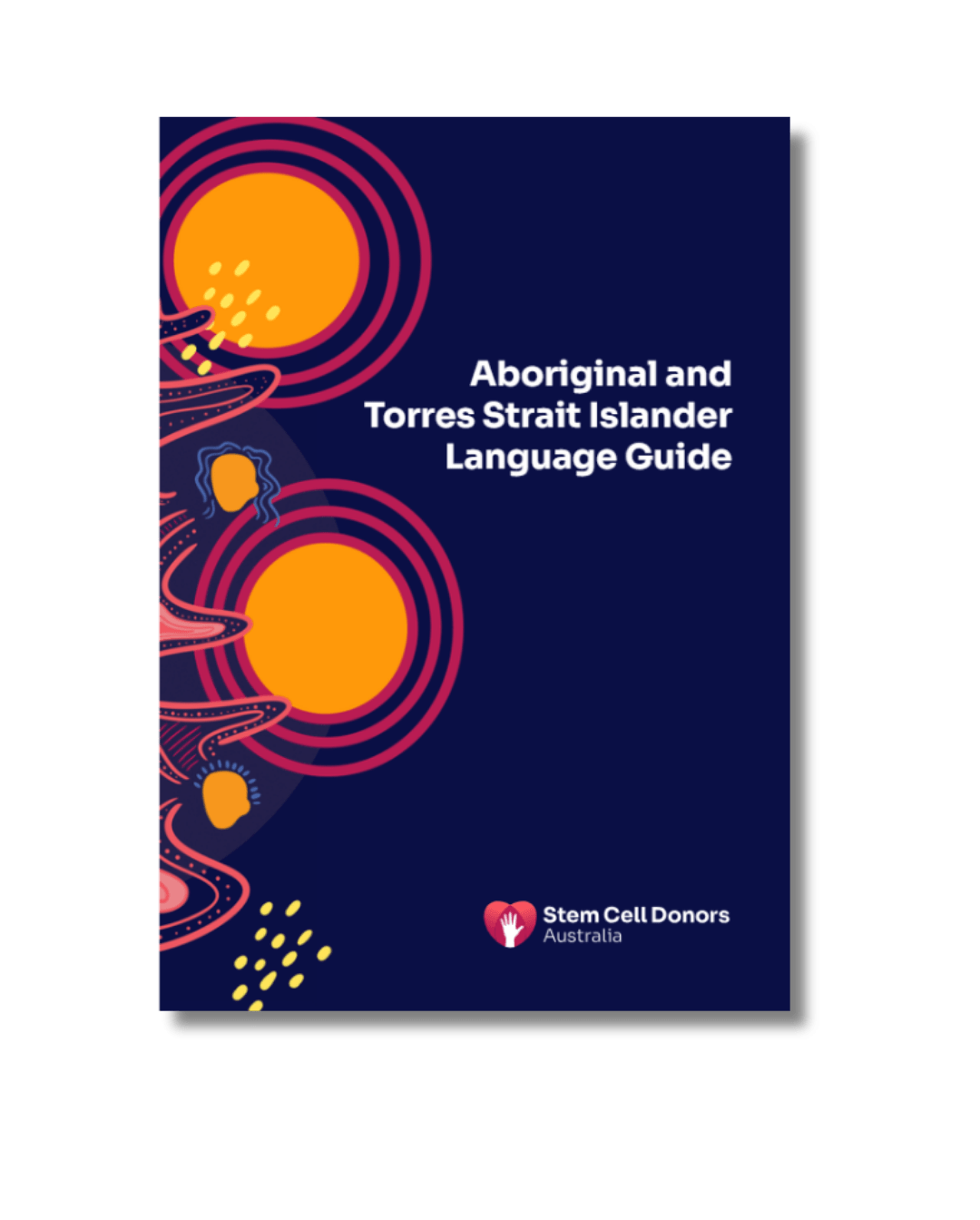
Another important milestone has been the development of our Aboriginal and Torres Strait Islander Language Guide to support our staff and the broader sector in their engagement with patients and donors.
The guide was developed with Aboriginal-led agency 33 Creative and informed by community consultation and message testing. The consultation process highlighted that language does far more than communicate information. It shapes trust, influences access to healthcare and can either empower people to take part in health conversations or unintentionally create barriers. The training delivered by 33 Creative highlighted how language influences people’s experiences of health systems and why culturally safe communication matters.
The training explored the relationship between language, history and trust, and highlighted how communication can influence whether people feel informed, respected and included in decisions about their health. It also reinforced that language continues to evolve, and that listening to First Nations voices is essential to ensuring our communications remain relevant, respectful and effective.
Learning through culture and connection
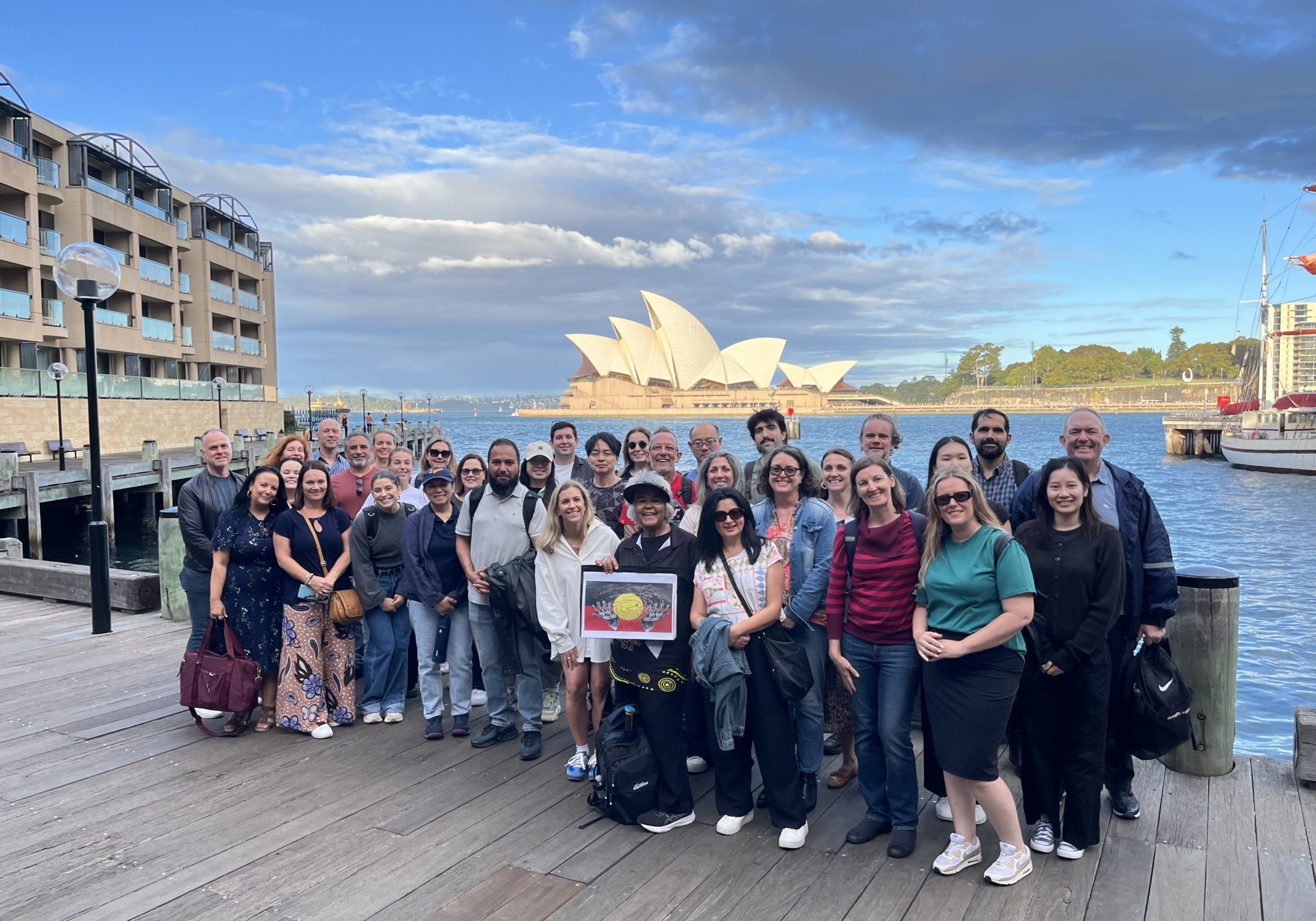
This year our team also participated in The Rocks Aboriginal Dreaming Tour with Aunty Margaret Campbell.
Experiences like this remind us that reconciliation is not only about policies and plans. It is also about listening to stories, understanding ongoing connection to Country and recognising perspectives that have shaped communities for generations. Alongside our RAP activities, these experiences are helping build cultural understanding across the organisation and creating space for reflection on how we work and engage with communities.
Looking ahead
Our Reflect RAP is helping us better understand what equity means in practice.
The lessons emerging through our Reflect RAP continue to reinforce that improving access to stem cell transplantation requires more than growing the registry. It requires trust, partnership, cultural understanding and a willingness to listen. It also requires systems, communications and decisions that reflect the needs of the people we exist to serve.
While we still have much to learn, the first months of our Reflect RAP have already strengthened the foundations for this work. These lessons will continue to shape how we build relationships, support informed choices and contribute to fairer access to life-saving treatment.